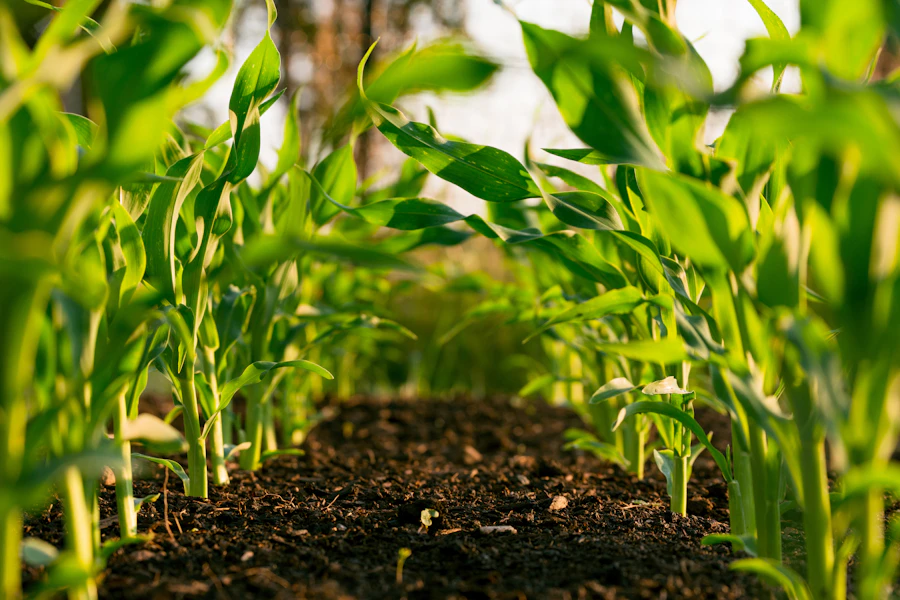

The first thing Ramesh Patil tells you about his farm is its smell. "Earlier, after the rains, the soil had a kind of heaviness to it," he says, leaning against a cane stalk taller than his shoulder. "Now it smells — I don't know how to say it exactly — alive." We are standing in his three-acre plot in Hatkanangale taluka, fifteen kilometres from Kolhapur city, where sugarcane has grown for as long as anyone in his family can remember.
Ramesh, 47, inherited the land from his father. He inherited, too, the farming system that came with it — two deep ploughings a season, three rounds of urea, one round of pesticide, flood irrigation from the shared borewell. Yield was predictable. Returns were not.
The Weight of the Loan
By 2022, Ramesh was carrying a loan of roughly ₹3.8 lakh — accumulated across three difficult seasons when cane prices fell, input costs rose, and the monsoon delivered rainfall distributed badly across the crop cycle. He had refinanced once. His wife, Sangeeta, worked part-time at a nearby cooperative to manage household expenses. Their son, Akash, had dropped out of a commerce course in Kolhapur town when the fees became unmanageable.
"I was not thinking about the environment then," he says, without defensiveness. "I was thinking about how to pay the next instalment."
His situation was not unusual. Across Maharashtra's cane belt, smallholder farmers with one to five acres are caught between the high fixed costs of conventional agriculture and the thin, unpredictable margins of cane pricing. The input-to-income ratio leaves almost no room for error.
The Conversation That Changed Things
In February 2023, a Glaubark field coordinator named Yogesh visited Ramesh's village as part of a cluster assessment for a new carbon project. Yogesh spent three days in the village, talking to farmers, walking plots, asking questions about soil history, irrigation sources, and current input regimes.
He was not selling anything. He was measuring.
Ramesh was sceptical. "I thought it was some government scheme with conditions attached," he says. "Or a company wanting to use our land for something." Yogesh explained the concept — slowly, in Marathi, with examples drawn from farmers in neighbouring villages who had enrolled the previous year. Carbon is already in the soil. If we manage the land better, more stays there. And there are companies abroad willing to pay for that.
"He showed me on his phone — here is the carbon in your soil. Here is what it will be in three years if you change these practices. And here is the payment you receive when it is verified."
— Ramesh Patil, Kolhapur district
Ramesh enrolled in April 2023. His plot was GPS-mapped, photographed, and entered into Glaubark's farm database. A baseline soil test was conducted — the first in-depth soil analysis his land had ever received.
The Transition Year
The first season was, by Ramesh's own account, uncomfortable. Switching from synthetic urea to a combination of vermicompost, neem cake, and liquid bio-stimulant required a completely different application rhythm. The Glaubark field team visited fortnightly in the first three months, adjusting recommendations based on plant response and soil conditions.
"There were moments when I thought — is the crop weaker? Should I just add a little urea? The team was very clear: stay with it." He did.
By the end of the first season, yield was slightly down — 3% below his historical average. But input costs had fallen by 34%. The net position was better than the previous season, which had shown a 12% decline in net income.
Drip irrigation was installed in November 2023 with partial support through a Glaubark-facilitated state government subsidy connection. Water consumption dropped by nearly half. The borewell, which had previously run for eight hours a day during peak crop periods, now runs for four.
What Verification Looks Like
In early 2024, eighteen months after enrolment, Glaubark's MRV team initiated the monitoring cycle for Ramesh's plot cluster. Satellite imagery confirmed that no residue burning had occurred. Field audit visits documented the input purchase records, the drip irrigation installation, the composting structure built beside the plot. A soil sample was retested.
Soil organic carbon on Ramesh's plot had increased from 0.41% at baseline to 0.57% — a meaningful improvement in the context of conventional cane soils in this region, which have been depleted over decades of intensive tillage and synthetic fertiliser use.
The monitoring data, combined with the field audit report, went to an independent third-party validator. Three months later, Ramesh's cluster received its first carbon credit issuance.
The First Payment
Ramesh received ₹18,400 for his share of the first carbon credit batch. It arrived, via direct bank transfer, in January 2025. He did not spend it immediately.
"I transferred ₹15,000 towards the loan and kept the rest," he says. "I wanted to see if it was real first. If the next payment came, then I would believe it properly."
The second payment arrived in September 2025. It was ₹21,800 — slightly larger, reflecting an improved monitoring result and a modestly higher carbon price in the voluntary market that quarter. By then, Akash had re-enrolled in his commerce course. Sangeeta had stopped the part-time work.
In total, across reduced input costs and two carbon payments, Ramesh's net farm income had increased by approximately 310% against his 2022 baseline. His loan balance stood at ₹1.1 lakh — still a burden, but manageable. And declining.
What He Would Tell Other Farmers
Ramesh pauses when asked what advice he would give to farmers considering enrolment. He picks up a handful of soil and lets it fall between his fingers. "It is not easy in the beginning," he says. "You have to trust a process you cannot see happening — the carbon, the microbes, whatever is going on underground. But the soil shows you, after one or two seasons. It holds water better. It doesn't crack the same way in summer. The crop looks better."
"And then the payment comes. And you understand: this land was always worth more than what the mandi was paying us for it. We just didn't know how to get to that value."
He looks out over the field, where the cane is knee-high and a uniform, healthy green. The smell, he says again, is different now. Alive.