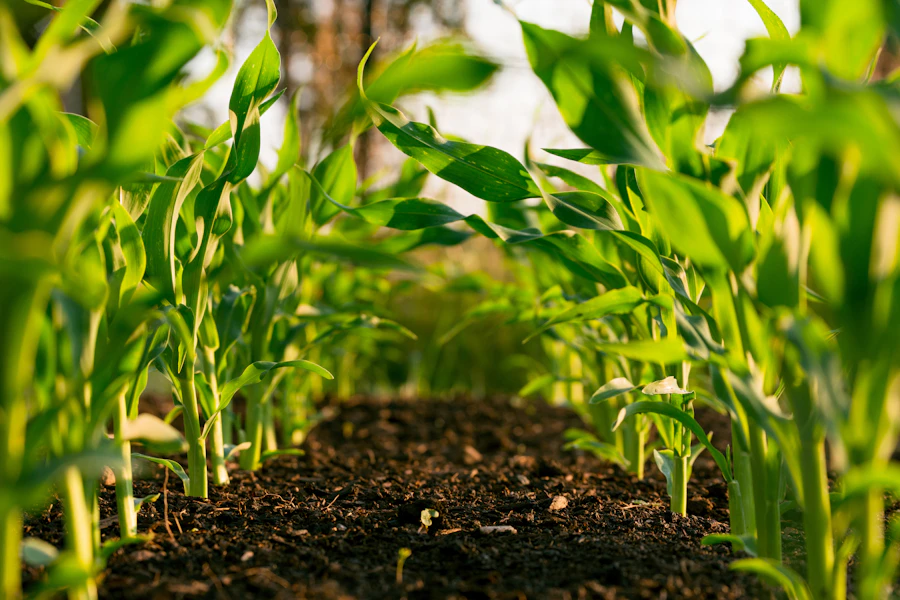

The term "regenerative agriculture" covers a wide range of practices — not all of them equally well-defined or consistently applied. At Glaubark, we work with a specific set of ten interventions, chosen because they can be verified by third-party auditors, measured through satellite and ground-level MRV, and adopted by farmers within the financial and logistical constraints of smallholder Indian agriculture.
Each practice below is mapped to its primary benefit: soil carbon (SC), emissions reduction (ER), cost reduction (CR), or some combination. We've also included estimated ranges where our field data is robust enough to provide them.
Practice 1: Drip Irrigation & Micro-Irrigation
Benefits: CR + ER
Conventional flood irrigation is both water-intensive and energy-heavy. Switching to drip systems reduces water use by 40–60% and cuts the energy consumed by pump operations significantly. For farmers dependent on diesel-powered borewells, this translates directly to input cost savings. Reduced waterlogging also improves soil aeration, supporting the microbial communities that drive carbon sequestration.
In our Maharashtra programs, drip adoption alone has been responsible for input cost reductions of 25–30% on a per-acre basis.
Practice 2: Organic & Bio-Input Substitution
Benefits: CR + SC + ER
Synthetic nitrogen fertilisers are the single largest input cost for most Indian grain and cane farmers, and also the largest source of nitrous oxide (N₂O) — a greenhouse gas roughly 300 times more potent than CO₂. Transitioning to organic alternatives — vermicompost, farmyard manure, neem-based formulations, liquid bio-stimulants — reduces N₂O emissions at the source and adds organic matter back to the soil.
The challenge is bridging the transition period: organic inputs typically require 1–2 seasons to show equivalent yield performance. Glaubark's field team manages this through graduated substitution and close agronomic advisory during the shift.
Practice 3: Crop Residue Incorporation
Benefits: SC + ER
Burning crop residue — post-harvest stubble, cane trash — releases carbon that was locked in the biomass back into the atmosphere as CO₂, while also generating black carbon (soot) with additional warming effects. Incorporating residue into the soil instead keeps that carbon in the ground, feeds soil microbes, and gradually improves soil organic carbon (SOC) levels over successive seasons.
This is one of the most measurable interventions in carbon accounting terms. Satellite-based monitoring can detect whether residue is being burned (through thermal hotspot data) and biogeochemical models can estimate the carbon retention value of incorporation by soil type and crop variety.
Practice 4: Reduced & Conservation Tillage
Benefits: SC + CR + ER
Deep ploughing disrupts soil aggregate structure, exposing stored carbon to oxidation. Conservation tillage — particularly zero-tillage or minimum-till systems — preserves the physical architecture of the soil, keeping carbon deposits intact and reducing the fuel and labour cost of tillage operations.
In sugarcane systems, ratoon management (allowing the plant to regenerate from the root system rather than replanting each season) is a form of reduced tillage that also avoids the significant emissions associated with soil disturbance during replanting.
Practice 5: Cover Cropping
Benefits: SC + ER
Leaving soil bare between cash crop seasons is agronomically and climatically costly. Cover crops — legumes like dhaincha or cowpea, brassicas, or grasses — protect soil from erosion, maintain biological activity during fallow periods, and fix atmospheric nitrogen when legumes are used, reducing the fertiliser requirement in the following season.
The root biomass and decomposed shoot material from cover crops also contribute directly to soil organic matter, building the carbon pool over successive seasons.
Practice 6: Composting & On-Farm Organic Matter Cycling
Benefits: SC + CR
On-farm composting of green waste, cattle manure, and crop residues creates a high-quality, slow-release soil amendment that improves water-holding capacity, supports soil biology, and replaces a portion of bought-in fertiliser inputs. Glaubark supports farmers in building composting infrastructure and connecting to FPO-level collection points where individual farm scale is too small to make composting cost-effective alone.
Practice 7: Integrated Pest Management (IPM)
Benefits: CR + ER
Pesticide synthesis and application are energy-intensive and ecologically disruptive — harming the beneficial insects and microbial communities that support soil health. IPM replaces blanket chemical application with targeted, evidence-based pest control using biological agents, pheromone traps, and precision timing. Input costs fall while crop quality often improves, as excessive pesticide residues affect market access and price.
Practice 8: Water Table & Moisture Management
Benefits: SC + CR + ER
Poorly managed soil moisture — either chronic waterlogging or drought stress — impairs the microbial processes that build soil carbon. Practices like raised bed cultivation, mulching, and rainwater harvesting structures (farm ponds, bunds) keep soil moisture in the range where aerobic carbon-building microbes thrive, rather than shifting to anaerobic conditions that produce methane.
Mulching with organic material also directly suppresses evaporation, reducing irrigation frequency and the associated energy cost.
Practice 9: Agroforestry Integration
Benefits: SC + ER
Planting trees and shrubs on farm boundaries and between crop rows creates a longer-term carbon sink in aboveground woody biomass, while the root systems of trees extend much deeper than annual crops, sequestering carbon at greater soil depth. Agroforestry also improves microclimate conditions — reducing peak temperatures, improving humidity — which benefits crop performance during heat stress events.
In carbon accounting terms, agroforestry trees must be tracked over their full lifetime to claim aboveground carbon benefits. Glaubark works with species selection and growth models validated for Indian conditions.
Practice 10: Improved Nutrient Management & Fertigation
Benefits: CR + ER
Precision nutrient delivery — applying fertiliser through irrigation systems (fertigation) at the rates, timing, and placement most effective for crop uptake — dramatically reduces fertiliser waste. Studies consistently show that 30–50% of conventionally applied nitrogen fertiliser is lost through volatilisation, leaching, or runoff rather than reaching the crop. Precision application reduces this loss while delivering equivalent or better yield performance with lower input quantities.
"The shift to fertigation halved our urea use in the first season without any yield drop. The savings paid for the micro-irrigation system in under two years."
— Farmer, Satara district, Maharashtra
How These Practices Are Verified
Each of the ten practices is monitored through a combination of satellite remote sensing, farmer-reported digital survey data (collected through Glaubark's multilingual mobile platform), on-ground audit visits, and biogeochemical modelling. The monitoring framework is designed to meet the evidence standards required by VCS verification auditors.
Not every farmer adopts all ten practices simultaneously. Glaubark's agronomists assess each farm's starting conditions and build a tailored practice adoption plan — sequencing interventions in a way that manages transition risk and builds farmer confidence through early visible results before moving to more significant changes.
Together, these ten practices form the agronomic foundation of every Glaubark carbon project. They are the bridge between a farmer's daily decisions in the field and the verified environmental outcomes that corporate buyers trust. More importantly, they are the mechanism through which a farmer's land becomes more productive, more resilient, and more financially rewarding — not despite caring for the climate, but because of it.